Emergency Equine Evacuation and Disaster Response Services
Emergency Equine Response in Disasters
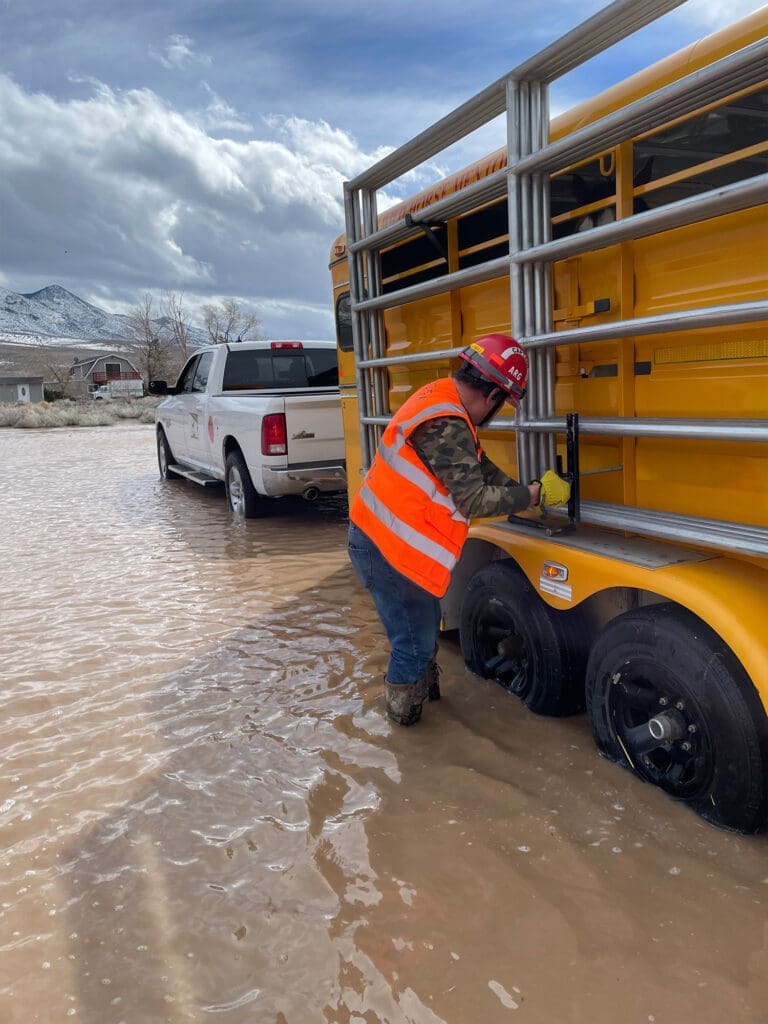
When natural disasters threaten Northern Nevada, large animals/livestock owners often face limited time, incomplete information, and rapidly changing conditions. Wildfires can overtake evacuation routes, flooding can isolate pastures, and severe storms can cut off access to feed and portable corral systems and shelter. Least Resistance Training Concepts (LRTC) provides professional emergency equine evacuation and response when these risks become immediate. The service is built for crisis conditions, when traditional resources are overwhelmed and large animals/livestock require specialized handling, transport, and portable corral systems. LRTC ensures equine evacuation is integrated into broader disaster operations rather than treated as an afterthought. By coordinating with fire departments, emergency management agencies, and local authorities, LRTC allows emergency personnel to focus on human life and property while large animals/livestock is managed by trained specialists. The mission is simple: protect large animals/livestock through rapid, organized, and disciplined response during wildfire, flood, and severe weather events.
Readiness, Training, and Rapid Deployment
LRTC’s emergency capability depends on constant readiness, trained volunteer teams, and specialized equipment staged for immediate deployment. Because disasters are unpredictable, LRTC maintains 24/7 availability and can mobilize volunteers within minutes to begin evacuation before conditions worsen. All volunteers complete rigorous training in large animal rescue, emergency evacuation, and temporary portable corral systems, with emphasis on safe handling, situational awareness, and teamwork under pressure. Regular hands on training ensures procedures remain automatic during real incidents. You can find out more about LRTC training programs from our training webpage.
LRTC maintains livestock trailers configured for emergency transport, portable corral systems, feed and water supplies, and communication equipment for large scale coordination. These resources are inspected, maintained, and strategically positioned across Northern Nevada to reduce response time. LRTC also operates short term emergency portable corral systems, providing immediate safety and basic care until conditions stabilize, after which large animals/livestock is returned to owners or transferred to partner facilities.
Coordination, Communication, and Owner Support
Clear coordination and communication guide LRTC operations during emergencies. Fire departments and emergency managers understand LRTC’s role in advance, allowing equine evacuation to be built into response planning. During active incidents, LRTC works within established command structures so large animals/livestock evacuation supports overall emergency objectives without creating delay or confusion. large animals/livestock owners receive consistent updates, with records maintained for all evacuated animals and clear communication about portable corral systems and next steps. Requesting assistance is straightforward: owners can use the red emergency button on the this website or call the 24 hour hotline at 775-352-3944. Callers should be ready to share location, number of large animals/livestock, and any health or behavioral concerns. In situations involving immediate danger to life or property, calling 911 is always the first step, with LRTC coordinating equine evacuation as part of the broader response.
When and How to Get Emergency Assistance
Least Resistance Training Concepts provides 24/7 emergency equine evacuation and disaster response services throughout Northern Nevada. When large animals/livestock are threatened by wildfire, flooding, or severe weather, owners can request help using the red emergency button on the LRTC website or by calling the 24-hour hotline at 775-352-3944. In life-threatening situations, 911 should always be contacted first, with LRTC supporting equine evacuation as part of the coordinated response. Donations and community support help fund training, equipment maintenance, and rapid deployment, ensuring these critical services remain available when the next disaster strikes.